
Stage 4 of 5 · NICU · 2 min read
Life in the NICU
With an omphalocele, your baby will spend time in the NICU. That could be days, months, or for some babies, a year. There's no set timeline, and it can feel like a roller coaster. Here's what to expect and how to be part of your baby's care.
The short version
- The first hours are "all hands on deck." You may have to wait to come in while the team assesses your baby.
- Ask your nurses what every wire and monitor does. They expect the question.
- Ask how you can help at care times, with diaper changes and temperature checks. It builds your bond.
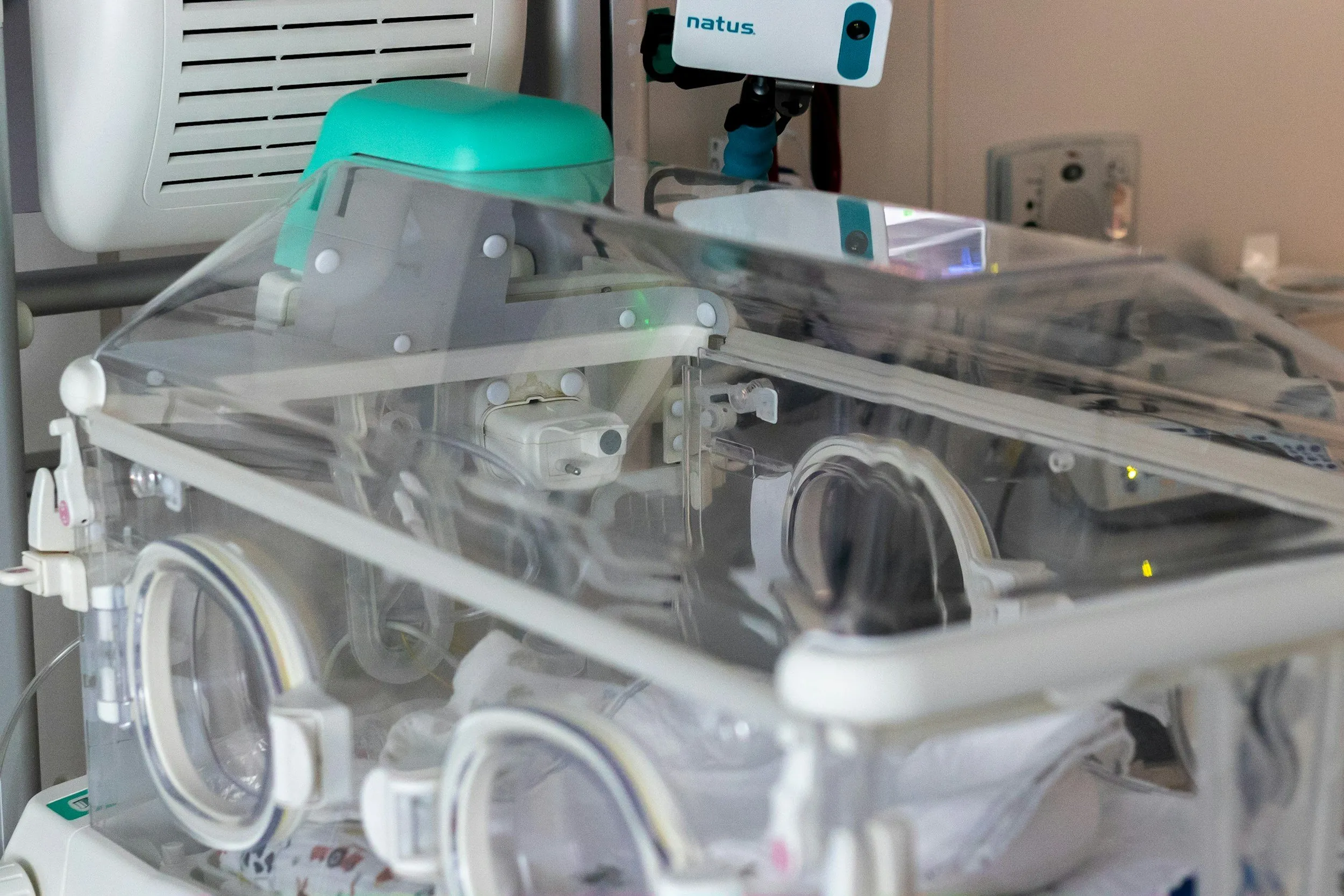
The first hours
When your baby first arrives in the NICU, it’s usually all hands on deck while the team works out what your baby needs right now. It can feel overwhelming, and they may ask you to wait before coming in. That’s so they can do a proper assessment. You’ll be at the bedside soon.
What your baby may be hooked up to
- A pulse oximeter to measure oxygen
- A heart monitor
- A feeding tube, or an IV for nutrition
- Oxygen or breathing support
- A temperature sensor, while your baby is small
Once things settle down, ask your nurses to explain each cord. Every NICU sets things up a little differently, offers different levels of care, and does the same tasks in its own way.
Care times: how you can help
Nurses usually group your baby’s care into set times. Ask to take part in diaper changes, temperature checks, mouth care and, when your baby is ready, holding and feeding. Doing the things you would do at home helps you bond, and it’s good practice for going home. Some hospitals will allow you to help with the daily “paint and wait” process too.
Primary nurses
Some NICUs use primary and associate nurses. A primary nurse chooses your baby and cares for them whenever they’re working, so they know your baby well and get to know you. An associate nurse covers when the primary nurse isn’t there. Not every hospital does this, and it doesn’t always work out perfectly, but it’s a real advantage, so it’s worth asking about.
Rounds
Most teams do daily rounds, when doctors, nurses and specialists talk through your baby’s plan. Ask whether you can join. Bring a notebook, ask questions, and ask for things to be explained again. You’re part of the team.
The long days
NICU time is long and non-linear: good days, setbacks, small wins. Celebrate the wins, like a gram gained, a tube removed or a first bath. And take care of yourself too. Here’s how other parents do it.
Every NICU experience is different, and every NICU does things differently.