
Stage 4 of 5 · NICU · 2 min read
Closure surgery, in plain language
Closure is when your baby's organs are placed back into the belly and the muscle and skin are brought together. It happens at different ages for different babies, depending on the surgeon and the size of the omphalocele. Here's what parents wish they'd understood before the first conversation with the surgeon.
The short version
- Small omphaloceles are often closed in one operation. Giant ones usually close in stages, over weeks, months or longer.
- Your surgeon's timing depends on your baby's lungs, size and skin, not on a calendar.
- "Paint and wait" is a real, common plan, not a delay or a failure.
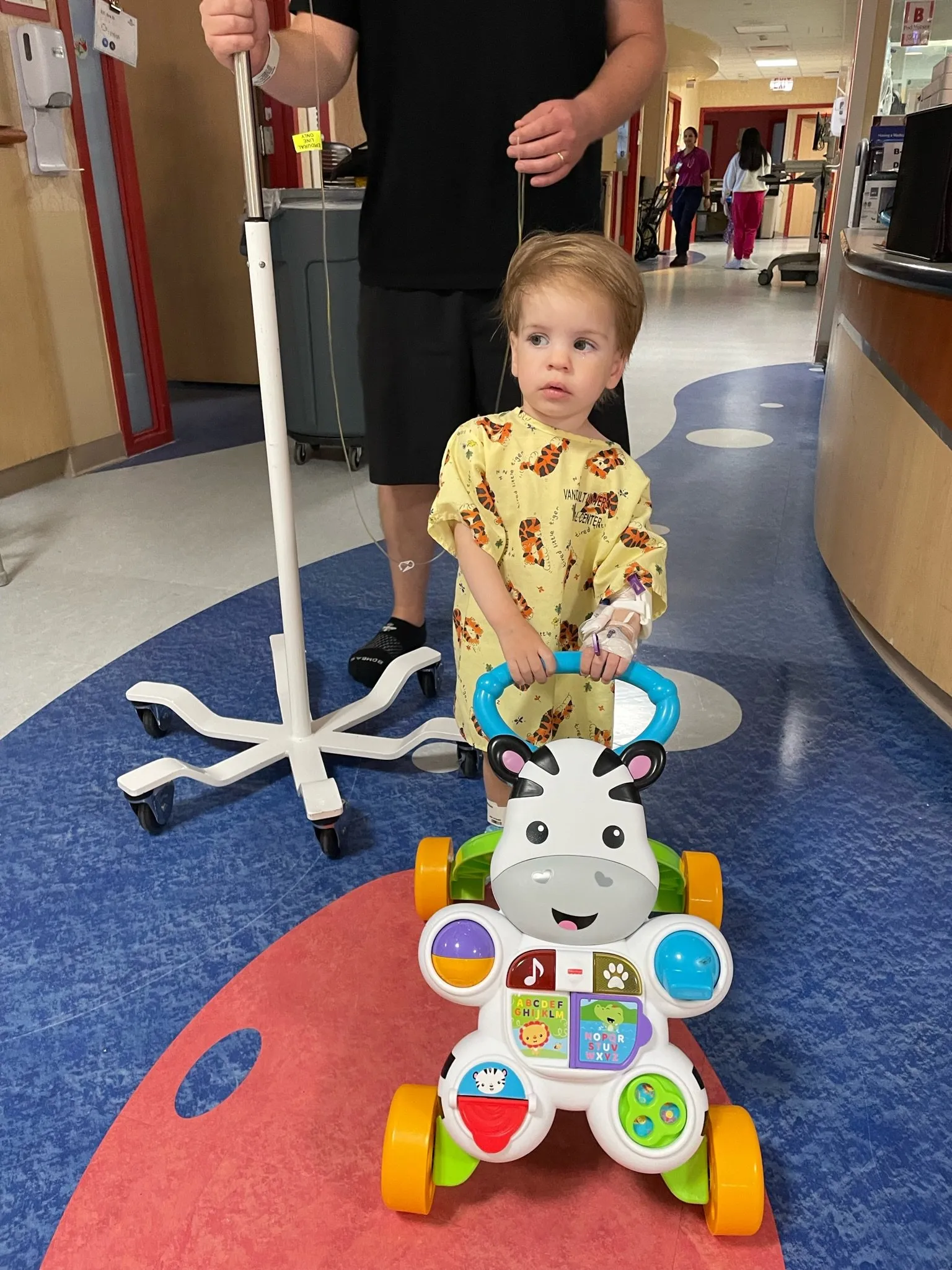
What is closure surgery?
The surgeon places the organs into the belly (abdominal cavity) and brings the muscle and skin together. Sometimes there isn’t enough room in the belly, or enough muscle and skin, to close it fully, so mesh or a graft may be used.
Types of closure
Primary repair
- Small omphalocele: the surgeon places all the organs back into the belly and closes the muscle and skin, often soon after birth.
- Larger omphalocele: there may not be enough room to close the muscle directly, so the surgeon may use an absorbable material to bridge the muscle and close the skin on top.
Staged repair
- Silo: a surgical pouch is placed around the organs outside the belly and raised up. Once the organs have moved back into the belly, the silo is removed and the small opening is closed.
- Multiple surgeries: some children with giant omphaloceles have one surgery to place one or two organs and close, then another surgery later to place the rest. This can also happen if a child has a bowel obstruction or another complication before the primary repair.
Paint and wait
Some babies with large or giant omphaloceles aren’t closed right away. The sac is “painted” with an antibiotic cream and wrapped while skin grows over it, and closure happens months (sometimes years) later, when your child is bigger and stronger. More in our FAQs.
Information from Nationwide Children’s Hospital
Why timing varies so much
Two families with the same diagnosis can have closure months apart, and both can be exactly right. Lung development, the size of the omphalocele and how the skin is growing all drive the decision. That’s why comparing your baby’s timeline to another baby’s rarely helps.
Questions to ask before closure surgery
- What has to be true before you would schedule closure?
- Do you expect one operation or a staged approach, and why?
- How long will we be in the hospital, on average?
- Can we (parents) stay overnight? What can we bring into the room?
- Will my child have drains after surgery? What will they look like?
- How do we care for the incision?
- What will feeding look like right afterward?
- What are common complications, and what limits will there be during recovery?
- How many omphalocele closures does your team do each year?
Recovery
Recovery is different for everyone. Your child may stay in the hospital for a few days or longer after surgery. Bring a few favorite things, like a blanket, stuffed animal, books or small toys, and a favorite snack for when the surgeon says it’s okay to eat and drink. Check in with Child Life: they often have toys and activities.
Scar healing
- Every child heals differently, and every scar is different. Your surgeon may also “make” a belly button.
- Always ask your doctor about any concerns with how the scar is healing.
Possible complications
Talk through all possible complications with your surgeon. Common ones include:
- Infection
- Breathing problems
- Feeding problems
Want to hear it from a surgeon? Watch an Ask a Pediatric Surgeon support group.