
Stage 3 of 5 · Birth & recovery · 2 min read
What delivery day looks like
Delivery with an omphalocele looks different from the birth you may have pictured. Knowing the order of events helps. Every hospital does things a little differently, so use this as a starting point for questions, not a script.
The short version
- Most O babies are delivered by planned C-section, often around 39 weeks.
- A NICU team is usually in the room to protect the omphalocele and check your baby's breathing right away.
- You may not hold your baby right away. Ask when you can see, touch and hold them, and plan to be part of their care.
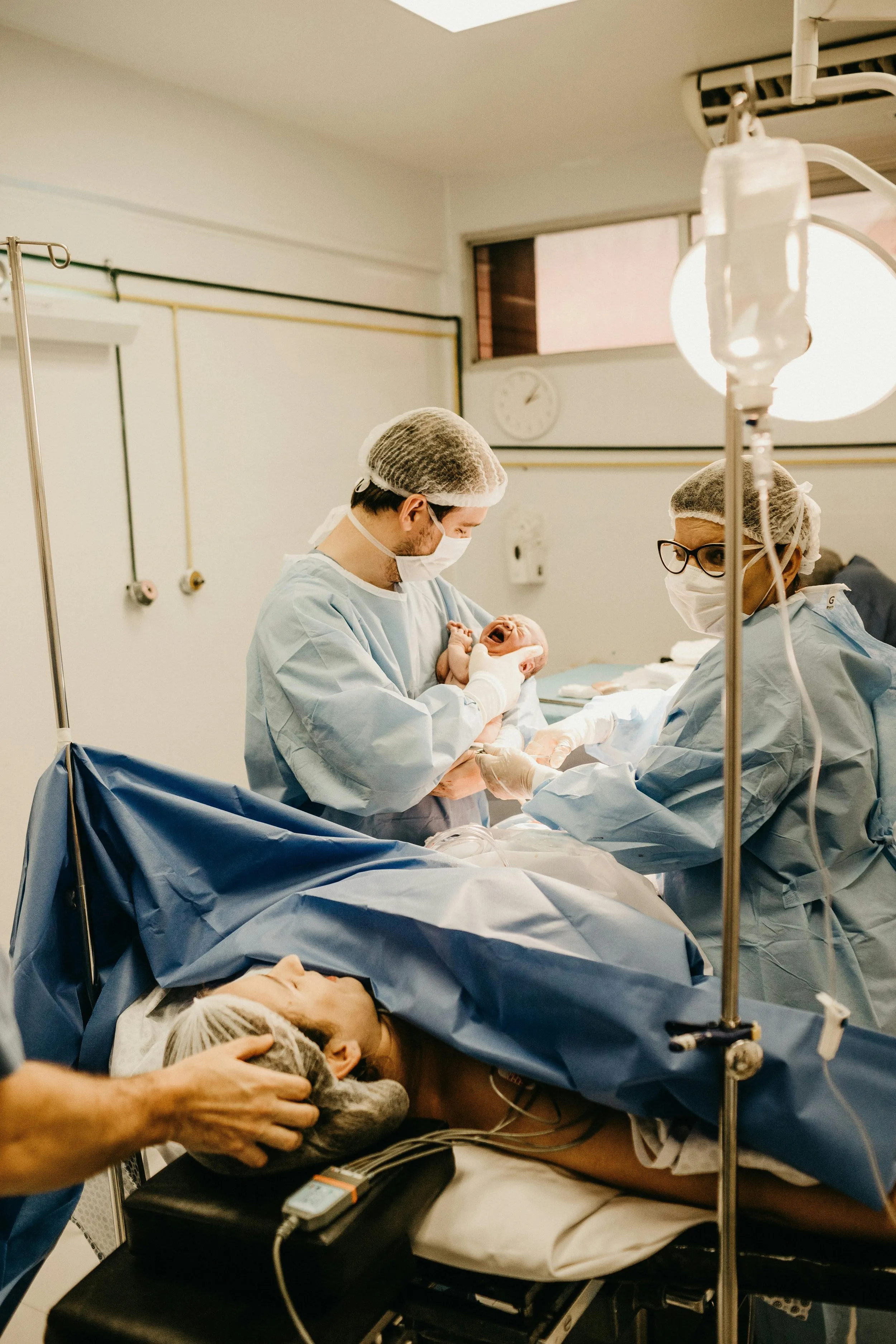
Before the day
- Most babies with a large omphalocele are delivered by scheduled C-section, often around 39 weeks. With a small O, a vaginal birth may be possible. Your MFM will talk with you about this.
- Make a plan for what happens if labor starts early: which hospital, who to call, and who drives.
- Pack your NICU bag, and plan for your own recovery too.
In the delivery room
Expect more people than you imagined. Alongside your OB and anesthesia team, there’s usually a NICU team (a neonatologist or nurse practitioner, nurses and a respiratory therapist) waiting for your baby.
The first minutes
Right after birth, the NICU team will usually:
- Protect the omphalocele. It’s covered with sterile, moist dressings or a clear bowel bag to keep it clean, warm and safe.
- Check breathing. Some O babies, especially those with a giant omphalocele, need help breathing at first.
- Start an IV for fluids and nutrition, and place a tube to keep the stomach empty.
- Move your baby to the NICU, or to a nearby hospital if your baby needs to be transferred.
When will I see my baby?
This varies a lot. Some parents get a quick look or a touch before the baby goes to the NICU. Others see their baby once they’re settled. Your partner or support person can often go with the baby. Ask ahead of time:
- Can I see or touch my baby before they leave the room?
- Can my partner go with the baby to the NICU?
- How soon after my C-section can I visit the NICU, in a wheelchair if needed?
- Can someone take photos for me?
The hours apart
Being in recovery while your baby is down the hall, or in another hospital, is one of the hardest parts. It’s normal to feel numb, scared, or strangely calm. Rest when you can, start pumping if you plan to (ask for a lactation consultant), and let your support person bring you updates and photos.
You’ll get to know your baby’s nurses, learn what each wire does, and start helping with care. More on life in the NICU.
Review note (hidden at launch): New page written for the redesign. Have an OB or neonatologist review the sequence of events.